


Balancing Love and Care for Sultan and Senior Lakota with Medical Needs

Caring for two dogs with vastly different life stages and physical abilities can feel like walking a tightrope. My 12-year-old rescue, Sultan, flourishes with attention and active engagement. Meanwhile, my 15-year-old senior, Lakota, requires intensive, gentle care due to severe mobility issues and medical vulnerabilities.
Achieving a healthy balance between these two important relationships requires thoughtful planning, structural routine, and heartfelt dedication. Here is how you can practically manage the unique needs of both dogs so they each feel loved, supported, and valued every day.
Understanding the Unique Needs of Sultan and Lakota
The first step toward balancing a multi-dog household is mapping out exactly what each animal requires to thrive.
Sultan’s Needs at Age 12
Though Sultan is technically a senior himself at age 12, his background dictates a need for high emotional engagement. Rescued from Alabama at age 5 after being chained outside and starved, he is still navigating independence but deeply craves security.

Quality Time: Engaging activities that foster connection, like structured play, fetch, or dedicated grooming sessions.
Emotional Support: Due to past trauma, Sultan has severe storm and firework phobias. He requires intensive reassurance and safe spaces during these events.
Physical Activity: Consistent opportunities to expend energy, practice social skills, and explore during walks.
Routine and Structure: Predictability is the cornerstone of his emotional recovery, helping him feel secure.
Lakota’s Medical and Emotional Needs
A pack member since the age of 6 weeks, at age 15, Lakota’s requirements are highly physical, clinical, and protective.
Pain Management: Severe hip issues and arthritis cause chronic pain. He needs gentle movement, orthopedic support, and a highly accessible environment.
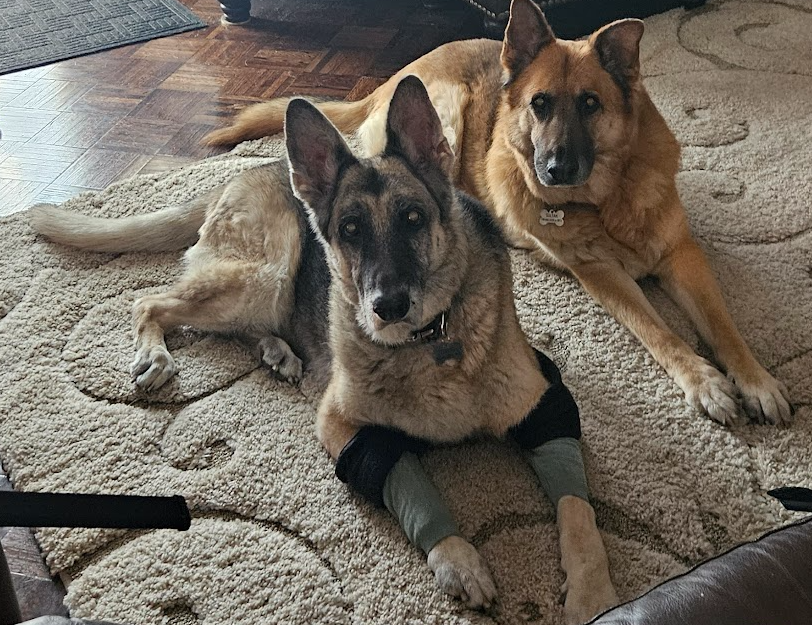
Mobility Assistance: A knuckling condition known as "dropped foot" affects his gait. He requires close monitoring and potential bracing to prevent paw damage or scraping injuries.
Dietary Care: A highly sensitive stomach means his diet, medication schedule, and feeding routine must be strictly controlled to prevent painful digestive upset.
Peace and Comfort: Senior dogs with physical limitations need a calm environment free from high-impact disruption, especially since Sultan's playful energy can sometimes be overwhelming.
Practical Strategies for Creating Balance
Managing these conflicting timelines doesn't mean splitting yourself in half. It means creating dynamic routines that honor both dogs simultaneously.
1. Master the Art of Separate, Tailored Walks
Trying to walk Sultan and Lakota together can frustrate both dogs. Instead, split their outdoor time:
The Sniffari for Lakota: Take Lakota on a short, slow-paced "sniff walk." Focus on mental stimulation through scent rather than distance. Utilize supportive harnesses (like a Help 'Em Up harness) or booties to protect his dropped foot from scraping against concrete.
The Energy Burner for Sultan: Follow up with a faster, longer walk or fetch session for Sultan. This fulfills his physical need for exercise and gives him the one-on-one, undistracted quality time he craves.

Sultan and Lakota - German Shepherd Security Alarms
2. Designate "Safe Zones" and Quiet Spaces
Because Sultan is active and craves attention, Lakota needs physical boundaries where she can rest without fear of being bumped or stepped on.
Since both dogs respect each other's space, I do not need a dedicated sanctuary or baby gates for Lakota. Her space as well as Sultan's features an orthopedic memory foam bed to soothe her arthritic hips.
Lakota has her own, dedicated bowl in a triple bowl feeder to prevent any food anxiety or accidental dietary cross-contamination, keeping her sensitive stomach safe.
3. Establish a Shared Storm and Anxiety Protocol
Sultan’s fear of thunderstorms requires my physical presence, which can be balanced alongside Lakota’s need for calm.
My bedroom is our centralized "comfort den" during storms.
Around summer holidays like July 4th, I use calming hemp chews and TV noise for Sultan.
While sitting on the floor to comfort a panicked Sultan, I use this stationary time to gently massage or apply red light therapy to Lakota’s aching hips. This fulfills Sultan's need for emotional proximity while delivering targeted physical therapy to Lakota.
4. Optimize One-on-One Attention Daily
It is easy for a high-needs medical dog to unintentionally monopolize a owner's time, leaving the other dog feeling left out.
For Sultan: I dedicate 15 minutes a day to a specific "Sultan-only" ritual. This could be interactive puzzle toys, fetch, clicker training, or brush time. Because he values structure, doing this at the exact same time every day eases his attention-seeking behaviors.
For Lakota: Dedicate quiet time to administer her medical care—like applying paw balms, fitting braces, or prepping special meals—with a soothing, low-stress tone so she associates her treatments with love and safety.

Lakota and Sultan getting to known each other
The Reward of a Balanced Pack
Caring for a trauma-survivor rescue alongside a geriatric, special-needs dog is an incredibly profound journey. By creating customized routines, establishing safe boundaries, and honoring their individual histories, I can successfully remove the stress from the equation. In doing so, I can ensure that both Sultan and Lakota live out their golden years surrounded by absolute comfort, safety, and love.


Comments